
 NEWS List
Why a Marked Length Scale Fiberglass Duct Rodder Saves Time on Telecom Projects
1. The Hidden Waste of Unmarked Duct Rodders in Telecom Construction
Telecom installation projects often involve repetitive operations.
A typical underground cable installation may include:
1.Open the manhole.
2.Inspect the duct.
3.Position the rodder.
4.Feed the fiberglass rod.
5.Determine whether the rod has reached the opposite end.
6.Pull the pulling rope.
7.Install the cable.
8.Record the route information.
9.Repeat the process for the next duct.
The cable-pulling operation itself may take only part of the total working time.
The hidden labor often comes from checking and rechecking the route.
The Problem With an Unmarked Rod
A conventional unmarked fiberglass rod tells the installer that the rod is moving forward—but not precisely how much rod has entered the duct.
An installer may have to estimate the distance by:
Counting reel rotations
Using a separate measuring tape
Checking drawings
Measuring the exposed rod manually
Estimating based on previous installations
These methods can be inconvenient in a busy manhole environment.
Suppose a crew needs to verify whether an underground duct is approximately 80 meters long.
With an unmarked rod, the team may need a separate measurement method.
With a marked rod, the rod itself provides a convenient reference.
This does not eliminate the need for proper surveying when accurate engineering measurements are required, but it can reduce unnecessary routine field measurement work.
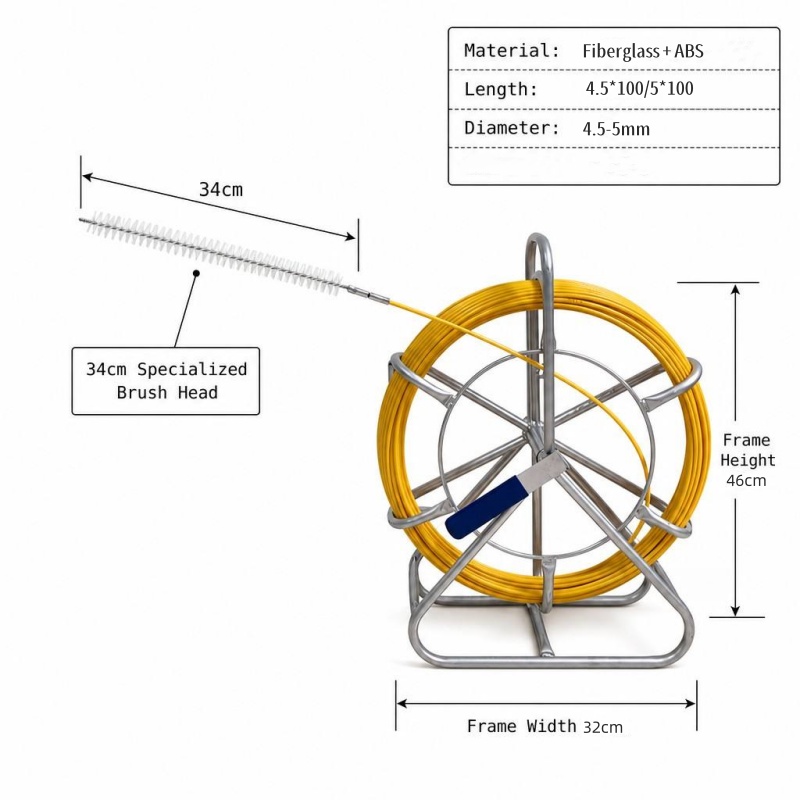
2. How Built-In Length Scale Improves Route Measurement Accuracy
The biggest advantage of a marked fiberglass rod is simple:
The rod provides a visible indication of how much length has been fed into the conduit.
Instead of asking:
“How far has the rod gone?”
the installer can look at the marking near the reel and obtain an immediate approximate reading.
Continuous Length Reference
Professional fiberglass duct rods may use printed, embossed, engraved, or otherwise permanently applied length markings.
A typical marking system may indicate:
Every 0.5 meter
Every 1 meter
Every 2 meters
Every 5 meters
The appropriate interval depends on the manufacturer's design and the application.
For general telecom construction, a 1-meter marking interval can provide a practical balance between readability and manufacturing complexity.
For specialized applications, shorter marking intervals may be useful.
Measurement Example
Imagine that a rodder is being fed into an underground duct.
At the beginning:
0 m
After continued feeding:
20 m
Then:
40 m
Then:
60 m
When the guide head reaches the opposite manhole, the exposed scale may indicate approximately:
78 m
The crew now has a quick field reference indicating that the duct route is approximately 78 meters long.
This information can be useful for:
Pulling-rope preparation
Cable-length planning
Route documentation
Installation records
Identifying unexpected route-length differences
Again, this is a field reference measurement, not a substitute for a calibrated survey instrument.
Marking Accuracy Matters
A length scale is useful only if it is manufactured consistently.
When evaluating a marked fiberglass duct rod, ask the supplier about:
Marking tolerance
Graduation interval
Marking method
Scale durability
UV resistance
Abrasion resistance
Visibility after repeated use
A scale that disappears after a few months of field work provides little long-term value.
The marking should remain readable after exposure to:
Dirt
Water
Mud
Sunlight
Repeated feeding
Cleaning
Normal abrasion
3. Real Benefits for FTTH, Public Utility and Civil Engineering Teams
Marked fiberglass duct rods are particularly useful in projects where the same underground routes are repeatedly inspected, measured, and cabled.
FTTH Installation
FTTH construction frequently involves relatively small ducts and complicated distribution routes.
Installers may need to determine:
Customer drop distances
Distribution conduit length
Building entrance distances
Innerduct length
Blockage positions
Distance between access points
A marked fiberglass rod can provide an immediate estimate during the duct-rodding process.
For example:
Rod reaches obstruction at 35 m
This tells the technician that the obstruction is approximately 35 meters from the feeding point.
That information can be recorded and compared with construction drawings.
If the expected route is 70 meters but the rod repeatedly stops at approximately 35 meters, the team has an immediate indication that the duct may contain an obstruction or unexpected configuration.
Public Utility Projects
Utility projects often involve long underground duct networks.
A marked rod can help crews document:
Duct lengths
Blockage locations
Manhole-to-manhole distances
Approximate route changes
Pulling-line installation progress
This can be particularly valuable during maintenance.
If a blockage occurs, knowing the approximate distance from the manhole can help technicians identify the corresponding section of the underground route.
Civil Engineering and Infrastructure Projects
Civil engineering projects may involve:
Road construction
Railway infrastructure
Industrial parks
Bridges
Tunnels
Municipal communication ducts
During construction, actual duct conditions do not always perfectly match drawings.
A marked duct rod provides a quick way to compare:
Designed route length vs. actual rodding distance
This can help identify discrepancies before cable installation begins.
4. On-Site Case: Reducing Re-Measurement Work in Manhole Operations
Consider a typical telecom maintenance operation involving two underground manholes.
The engineering drawing indicates that the duct route should be approximately 90 meters long.
Conventional Unmarked Rod
The crew inserts an unmarked fiberglass rod.
The rod reaches the opposite manhole.
The team now knows the route is passable—but does not have a convenient direct reading of how much rod was inserted.
If the route length needs to be recorded, the crew may need to use:
A measuring tape
A separate rope measurement
Existing construction records
Another measurement procedure
This creates additional work.
Marked Fiberglass Rod
With a marked rod, the crew feeds the rod through the duct and reads the scale when the guide head reaches the opposite end.
Suppose the reading is approximately:
88 m
The crew now has a quick field measurement indicating that the actual rodding distance is approximately 88 meters.
If the drawing says 90 meters, the difference can be investigated.
Possible explanations include:
Drawing tolerance
Different measurement reference points
Duct routing variation
Manhole geometry
Actual construction deviation
The marked rod does not automatically explain the discrepancy.
But it helps the crew identify the discrepancy faster.
Obstruction Location Example
The same principle applies to blocked ducts.
Suppose the rod stops at:
42 m
The crew can record:
“Duct obstruction encountered at approximately 42 m from Manhole A.”
This is much more useful than simply recording:
“Duct blocked.”
The approximate location can help maintenance teams determine where to investigate.
For repeated telecom construction, these small improvements can accumulate into meaningful labor savings.
5. Matching Scale Marking Standard to Your Daily Cable Laying Tasks
Not every project requires the same scale design.
The ideal marking system depends on how the rod will be used.
1-Meter Markings
A 1-meter graduation is a practical general-purpose choice.
Suitable for:
FTTH
Telecom ducts
Building projects
Municipal communication systems
General cable pulling
It provides enough resolution for routine route measurement without making the rod visually overloaded.
0.5-Meter Markings
Half-meter markings provide greater measurement resolution.
They may be useful for:
Short indoor routes
Building cable installations
Narrow conduits
Precision-oriented maintenance work
However, denser markings can become harder to read when the rod is dirty or moving quickly.
5-Meter Markings
Larger intervals may be appropriate for:
Very long underground routes
Utility ducts
Large infrastructure projects
Situations where only approximate distance is required
The benefit is improved readability over long distances.
Dual-Scale Marking
For contractors working across different applications, a dual-format marking system can be useful.
For example:
1 m / 5 m emphasized markings
Smaller graduations provide detailed reference, while larger markings allow quick visual identification of major distances.
This is particularly useful when the same rodder is used for both short FTTH work and longer underground duct projects.
6. Other Labor-Saving Features to Look for in Professional-Grade Rodders
Length markings are useful, but they are only one part of a professional fiberglass duct rodder.
A high-quality system should also be evaluated according to its overall design.
Smooth-Reel System
A good reel should allow the rod to feed and retract smoothly.
Features may include:
Low-friction bearings
Stable frame
Controlled reel rotation
Brake mechanism
Easy carrying handles
A smooth reel reduces unnecessary manual effort.
High-Visibility Rod
A brightly colored rod can be easier to see in:
Underground manholes
Construction sites
Muddy environments
Low-light conditions
Visibility is particularly useful when the rod extends a long distance away from the operator.
Durable Outer Coating
The fiberglass core should be protected by a suitable outer coating.
The coating helps protect against:
Abrasion
Moisture
Dirt
Repeated contact with conduit walls
The exact coating material should be selected according to the manufacturer's specifications and intended environment.
Interchangeable Guide Heads
Different ducts may require different guide-head designs.
Useful options can include:
Ball-shaped heads
Bullet-shaped heads
Flexible guides
Pulling eyes
Threaded connectors
A replaceable guide head can extend the practical service life of the complete rodder system.
Strong End Fittings
The connection between the fiberglass rod and the guide head is a critical mechanical point.
Professional models should have:
Secure threaded or mechanical connections
Appropriate load capacity
Corrosion-resistant fittings
Replaceable components where practical
The rod itself may have excellent tensile strength, but a weak end connection can become the actual failure point.
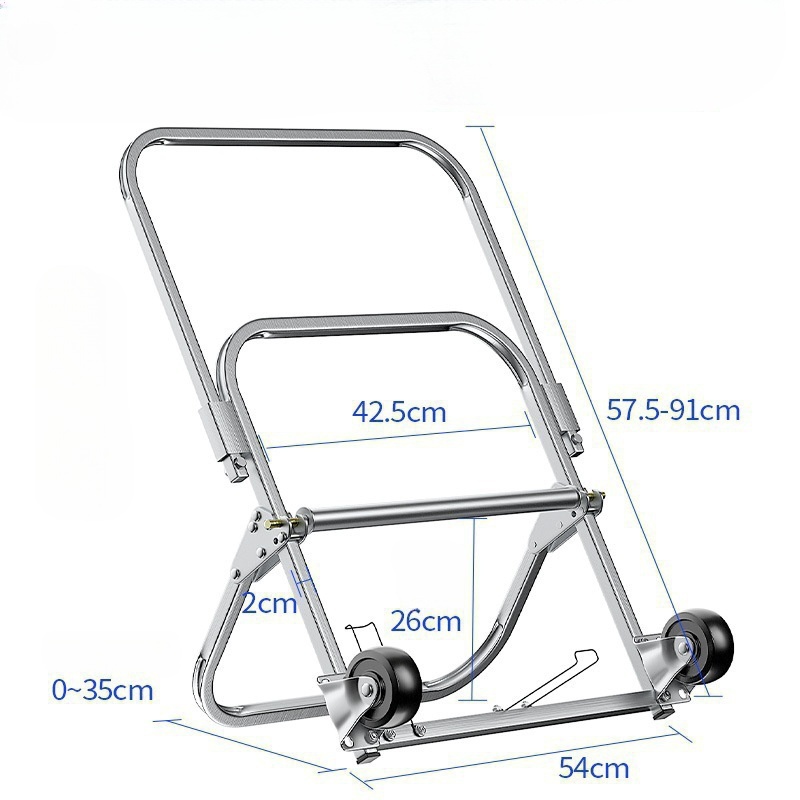
Ergonomic Reel Design
A professional rodder may be transported between multiple manholes and construction sites every day.
Look for:
Large wheels
Carrying handles
Stable frame
Compact storage
Easy reel access
These features may seem minor, but repeated handling is a significant part of field productivity.
7. Why Telecom-Grade Models Outperform Regular Consumer Versions
A consumer-grade fish tape and a telecom-grade fiberglass duct rodder may look similar at first glance.
Their intended operating environments are very different.
Consumer Tools
Consumer products are generally designed for:
Occasional use
Short conduit runs
Residential projects
Light-duty wiring
DIY applications
Their priorities are usually:
Low cost + basic functionality
Telecom-Grade Rodders
Professional telecom equipment is designed for repeated field use.
The priorities become:
Durability + reliability + measurement + ergonomics + serviceability
A professional rodder may include:
Continuous fiberglass rod
Reinforced outer coating
Permanent length markings
Heavy-duty reel
Replaceable guide head
Corrosion-resistant hardware
High-quality bearings
Ergonomic frame
Multiple length options
Different rod diameters
Higher load capacity
Commercial professional duct rodder systems demonstrate this difference. For example, General Machine Products offers duct rodder configurations with different rod diameters, lengths, tensile ratings, minimum bend dimensions, and reel designs rather than treating the rod as a simple one-size-fits-all fish tape. (gmptools.com)
Condux similarly offers multiple duct-rodder sizes and configurations for different installation requirements. (condux.com)
Marked Scale + Professional Rod Design = Greater Field Efficiency
The real advantage of a marked fiberglass duct rodder is not simply that it contains numbers.
It combines cable-path installation with immediate field reference information.
Consider the difference:
Conventional Workflow
Rod → reach target → remove rod → measure route separately → record distance
Marked Rod Workflow
Rod → feed → read scale → record approximate distance
The second workflow can eliminate some repetitive measurement steps.
The time saved on one installation may be modest.
But telecom contractors rarely perform only one installation.
If a crew handles dozens of duct operations per week, even small reductions in repetitive measurement work can accumulate.
How to Choose a Marked Fiberglass Duct Rodder
Before purchasing, evaluate the following parameters:
Feature What to Check
Rod diameter Match to duct size and route conditions
Rod length Match typical project distance
Length marking 0.5 m, 1 m, 5 m or customized
Marking durability UV, abrasion and moisture resistance
Tensile strength Verify manufacturer rating
Minimum bend radius Must suit the duct route
Outer coating Check abrasion and environmental resistance
Guide head Replaceable and suitable for duct
Reel Stable and smooth operation
Frame Suitable for daily transportation
Accessories Pulling eye, swivel, rope, guides
Customization Logo, scale, color and packaging if required
For B2B buyers, customization can also be important.
Professional manufacturers may provide:
Metric scale
Imperial scale
Dual-unit markings
Customer logo
Customized color
Customized reel
Customized rod diameter
Customized rod length
Private-label packaging
This allows telecom contractors and distributors to standardize their tools across different field teams.
Conclusion: A Small Feature That Can Deliver Repeated Labor Savings
A marked length scale may appear to be a small product feature.
In daily telecom construction, however, it can solve a practical problem:
field teams need to know how far the rod has traveled.
Without markings, workers often depend on estimation or separate measuring procedures.
With a clearly visible and durable length scale, the rod can provide an immediate approximate reference during:
FTTH installation
Underground telecom construction
Utility duct maintenance
Manhole operations
Civil infrastructure projects
Cable route inspection
Duct blockage diagnosis
The most valuable benefit is not that a marked rod makes the actual cable pull dramatically faster.
Rather, it can reduce the small, repetitive measurement tasks surrounding the cable pull.
When combined with a smooth reel, durable fiberglass construction, replaceable guide heads, high-visibility coating, ergonomic handling and appropriate rod diameter, the marked fiberglass duct rodder becomes more than a basic cable-pulling accessory.
It becomes a multi-purpose field tool for duct access, route verification and cable installation preparation.
For telecom contractors carrying out hundreds or thousands of cable-laying operations, those small improvements can add up.
A better rodder does not only pull the cable—it helps the crew work smarter.