
 NEWS List
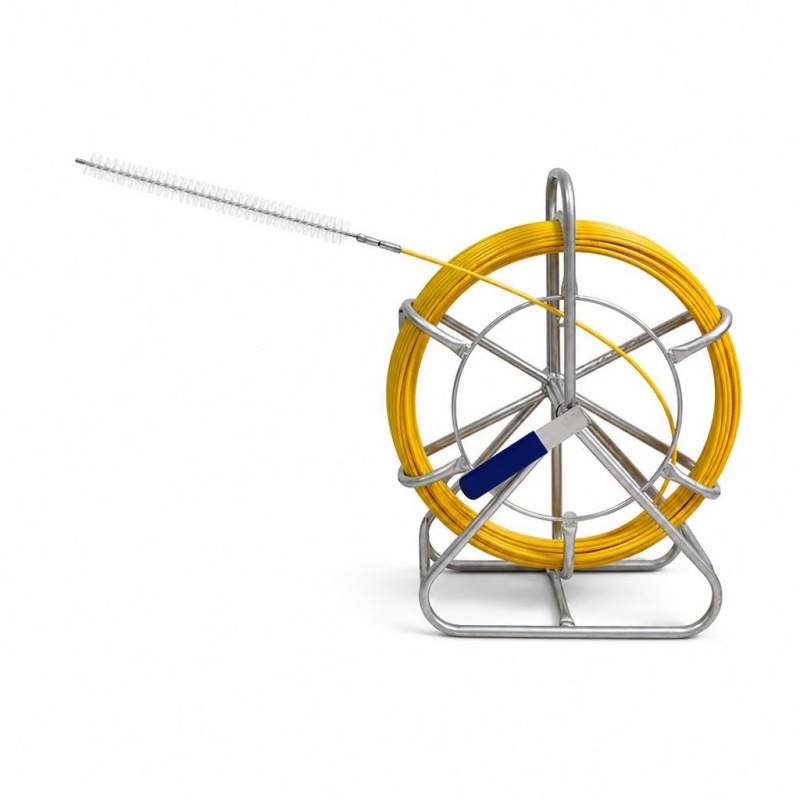
One-Man Operate Cable Puller: How to Improve Installation Efficiency With a Fiberglass Rod
Introduction: Can a Fiberglass Cable Puller Really Be Operated by One Person?
Cable installation is becoming increasingly labor-intensive as telecom networks, FTTH infrastructure and underground utility projects continue to expand.
For contractors, the challenge is not simply finding enough workers. It is also about using labor efficiently.
Traditional cable-pulling work may require one worker to feed the pulling tool or rod while another worker manages the cable, reel or pulling operation. On small projects, indoor installations and short conduit routes, this can mean assigning two people to a task that may be manageable with a well-designed fiberglass duct rodder.
A one-man operate cable puller is designed around this efficiency opportunity.
When a fiberglass duct rodder combines a lightweight but sufficiently rigid rod, smooth reel rotation, controlled payout, ergonomic handling and suitable accessories, one trained worker may be able to complete certain cable-routing tasks independently.
However, one-person operation should not be confused with eliminating all site safety requirements. OSHA guidance notes that underground cable-pulling work can involve significant physical force, bends can increase pulling resistance, and mechanical assistance may be appropriate when pulling loads become excessive. (osha.gov)
The practical objective is therefore:
Use equipment design to reduce unnecessary labor—not to ignore load, route or safety limitations.
1. Labor Cost Pressure in Modern Cable Laying Projects
Labor is one of the largest controllable costs in many cable installation projects.
This is particularly important for contractors working on:
FTTH deployment
Telecom conduit installation
Building communication networks
Security cable installation
Data communication systems
Underground utility projects
Industrial cable routing
Maintenance and repair work
A conventional cable-pulling workflow may divide responsibilities between two or more workers:
Worker A: feeds the pulling rod or cable.
Worker B: manages the reel, cable or receiving end.
For larger cable installations, additional workers may be necessary.
But not every installation requires a large crew.
The Hidden Cost of Two-Person Tasks
Suppose a contractor has a large number of small conduit routes.
Each individual route may only take a short period of time, but requiring two workers for every task can significantly increase total labor hours.
For example:
10 small routes × 2 workers = 20 worker assignments
If the same suitable routes can safely be completed by one trained worker:
10 small routes × 1 worker = 10 worker assignments
This does not mean that the installation time itself is automatically cut in half. Instead, the potential saving comes from reducing the number of people required for selected tasks.
That distinction is important for realistic project planning.
Labor Efficiency Is About Removing Unnecessary Steps
A well-designed fiberglass duct rodder can help reduce:
Repeated lifting
Manual carrying
Reel repositioning
Uncontrolled rod payout
Communication between workers for simple operations
Repeated walking between the two ends of a short route
The result can be a more streamlined installation process.
2. How a Well-Designed Fiberglass Duct Rodder Enables Single-Person Operation
A fiberglass duct rodder cannot magically turn every cable pull into a one-person job.
Instead, several design features can make single-person operation practical for appropriate applications.
2.1 Lightweight Fiberglass Rod
Fiberglass provides a useful combination of stiffness and flexibility.
The rod must be rigid enough to push through a conduit while remaining flexible enough to negotiate reasonable bends.
This push capability is one of the main advantages over pulling cable through an empty conduit using only a rope.
Commercial duct rodders are available in different diameters and lengths because different duct conditions require different combinations of stiffness, flexibility and pulling capacity. Condux, for example, lists rod diameters from 5 mm to 13 mm with different pull strengths and minimum bending radii. (condux.com)
2.2 Ergonomic Reel
The reel should allow the operator to:
Push the rod forward
Control payout
Stop the reel
Move the equipment
Rewind the rod
without constantly repositioning the entire machine.
A stable frame is particularly important when only one person is operating the equipment.
2.3 Wheels
Large wheels can make a substantial difference on construction sites.
Instead of carrying a heavy reel between locations, the operator can roll it to:
Manholes
Building entrances
Telecom cabinets
Indoor work areas
Utility corridors
A wheeled duct rodder is therefore not merely easier to transport; it can reduce the physical workload associated with equipment positioning.
2.4 Controlled Reel Rotation
A reel brake or controlled payout mechanism allows the operator to stop or slow the rod when necessary.
This is especially useful when feeding a long fiberglass rod through a conduit.
A free-spinning reel can continue releasing rod after the operator stops pushing, creating unnecessary loops and tangles.
A controlled reel helps maintain a predictable workflow.
2.5 High-Visibility Rod
Brightly colored fiberglass rods are easier to see against:
Concrete
Soil
Asphalt
Equipment
Underground work areas
Better visibility can help the operator monitor how much rod has been deployed and identify the rod's position during work.
2.6 Length Markings
A marked fiberglass rod can provide a quick indication of how much rod has entered the duct.
This can help an individual operator estimate:
Approximate insertion distance
Blockage location
Remaining rod length
Distance between access points
Length markings are a field reference rather than a substitute for calibrated surveying equipment, but they can reduce unnecessary measurement steps during routine cable work.
3. Optimized Reel Structure: Smooth Feeding and Stable Tension Control
For one-person operation, the reel is almost as important as the fiberglass rod itself.
A poorly designed reel can force the operator to constantly fight the equipment.
A well-designed reel should allow:
easy payout → smooth feeding → controlled stopping → organized rewinding
Smooth Feeding
The reel should rotate with relatively low resistance.
If the operator must repeatedly stop and manually pull the rod away from the reel, the productivity advantage of a one-person system quickly disappears.
Stable Frame
The reel frame should remain stable while the rod is being pushed.
A lightweight frame that moves or tips easily may require the operator to stop and reposition it.
A stable steel frame can provide a more predictable base.
Brake or Payout Control
A brake allows the operator to regulate reel rotation.
The principle is simple:
Push rod → reel pays out → operator controls speed → stop when resistance changes.
This is particularly valuable when working around manholes or narrow entrances.
Correct Reel Alignment
Even a good reel will work poorly if it is positioned incorrectly.
The operator should align the reel as closely as practical with the conduit entrance.
Poor alignment can create:
Side loading
Increased friction
Uneven rod payout
Excessive bending
Rod tangling
OSHA's cable-pulling guidance highlights the importance of reducing unnecessary friction and controlling pulling operations, especially where conduit configuration increases resistance. (osha.gov)
4. Step-by-Step Workflow for One Man to Complete a Cable Installation
The exact workflow depends on the cable type, route, duct configuration and site safety requirements.
For a suitable short or moderate conduit route, a practical workflow can be organized as follows.
Step 1: Inspect the Route
Before feeding the rod, check:
Duct entrance
Duct diameter
Approximate route length
Number of bends
Existing cables
Obstructions
Manhole condition
Sharp edges
Water or debris
If the route is severely blocked or presents significant hazards, stop and address those conditions first.
Step 2: Inspect the Duct Rodder
Check:
Fiberglass rod
Outer coating
Pulling head
End fitting
Reel
Brake
Wheels
Frame
Do not use a rod with obvious structural damage until it has been properly evaluated.
Step 3: Position the Reel
Move the wheeled rodder close to the conduit entrance.
Align the reel with the duct as much as practical.
If necessary, use a suitable guide or roller to protect the rod from sharp edges.
Step 4: Feed the Fiberglass Rod
Push the rod steadily into the duct.
Do not use sudden impacts.
A useful operating rhythm is:
push → feel → pause → adjust → continue
When the rod encounters resistance, do not automatically increase force.
Instead, determine whether the resistance is caused by:
A bend
Friction
Debris
Blockage
Existing cable
Poor alignment
Step 5: Monitor Insertion Distance
If the rod has length markings, use them to estimate how far the rod has entered the conduit.
For example:
“Rod stopped at approximately 38 m.”
This information can help identify the approximate location of a blockage or compare the actual route with project drawings.
Step 6: Connect the Pulling Line
Once the rod reaches the target end, connect it to the appropriate pulling rope or line.
For fiber optic installations, the connection system should be compatible with the cable and pulling procedure.
Corning's installation procedures describe using appropriate pulling grips, swivels and pulling lines and emphasize staying within the cable manufacturer's maximum pulling tension. (corning.com)
Step 7: Pull the Cable Back
The fiberglass rod can now be used to bring the pulling line back through the duct.
For sensitive cables, the pulling force must remain within the cable manufacturer's specified installation limit.
The rod's strength does not override the cable's limitations.
Step 8: Guide and Protect the Cable
As the cable enters the conduit:
Avoid sharp bends
Prevent twisting
Keep the cable aligned
Use appropriate lubricant where specified
Maintain the required bend radius
FOA installation guidance emphasizes controlling bend radius, avoiding excessive pulling tension and preventing cable twisting during fiber installation. (foa.org)
Step 9: Disconnect and Rewind
After installation:
1.Disconnect the cable.
2.Clean the rod.
3.Inspect it.
4.Rewind evenly.
5.Return the reel to its storage position.
This final step is important because a one-person workflow should not create additional maintenance problems for the next job.
5. Efficiency Comparison: Traditional 2-Person Workflow vs. One-Man Operation
The main difference between the two workflows is not necessarily the physical speed of pulling.
It is the number of people required to coordinate routine operations.
Task Traditional 2-Person Workflow One-Person Workflow
Transport rodder Two workers may assist Wheeled reel moved by operator
Position reel Worker coordination Operator positions equipment
Feed rod One worker feeds Operator feeds directly
Control payout Second worker may assist Integrated reel/brake control
Monitor distance Separate measurement may be needed Rod markings can provide reference
Connect pulling line Shared task Operator can prepare connection
Rewind rod Two-person handling may be used Operator controls reel
Suitable route Short/medium and larger jobs Selected short/small or controlled routes
Large/high-load pull Additional manpower/equipment Usually requires additional resources
Where Does the Productivity Gain Come From?
Consider a small FTTH conduit installation.
With a traditional workflow:
Worker A → feeds rod
Worker B → manages reel/cable
With a suitable one-person rodder:
Operator → moves reel + feeds rod + controls payout
The second worker can potentially be reassigned to another productive task.
That can be more valuable than simply reducing the duration of one individual cable pull.
Important Limitation
A one-man cable puller should not be used as a reason to eliminate workers where the route requires:
High pulling force
Long-distance cable installation
Multiple access points
Heavy cables
Traffic control
Confined-space procedures
Continuous communication
Mechanical pulling equipment
A second worker for safety
For underground electrical work, OSHA requirements may require employees at particular locations and reliable communication depending on the operation. (osha.gov)
Therefore:
One-person operation is an application-specific productivity strategy, not a universal replacement for a cable installation crew.
6. Suitable Scenarios: Narrow Manhole, Indoor FTTH and Small-Scale Telecom Jobs
The greatest benefit of a one-person fiberglass duct rodder is usually found in small, repetitive and relatively controllable cable-routing tasks.
Scenario 1: Indoor FTTH Installation
Indoor fiber installations often involve:
Short conduit sections
Building risers
Communication cabinets
Floor-to-floor pathways
Small-diameter conduits
Customer premises
A compact fiberglass rodder can be convenient because the equipment can be moved through buildings without requiring a large crew.
For example, specialized telecom tooling includes small-diameter fiberglass rods designed for FTTP/last-mile applications and use in occupied conduits. (telenco.com)
Scenario 2: Narrow Manhole Operations
A compact reel can be useful around constrained access points where large cable-pulling equipment is difficult to position.
The operator can roll the rodder close to the manhole and feed the fiberglass rod into the duct.
However, underground work requires appropriate hazard assessment and compliance with applicable entry, communication and electrical safety procedures.
Scenario 3: Short Telecom Conduit Routes
Examples include:
Cabinet-to-building connections
Distribution box connections
Short duct extensions
Communication conduit preparation
Local repair work
These jobs can benefit significantly from reducing setup and labor coordination.
Scenario 4: Maintenance and Repair
Maintenance teams often need to complete relatively small tasks quickly.
A portable fiberglass duct rodder can be kept in a service vehicle and deployed when needed.
This can be more practical than mobilizing a larger cable-pulling system for a short conduit.
7. How This Tool Reduces Team Workload in Peak Construction Season
Peak construction periods create a different labor problem.
The issue may not be whether a contractor can find enough workers for one project.
The issue is whether the contractor can allocate workers efficiently across many simultaneous projects.
Imagine a telecom contractor running five installation crews.
Each crew normally assigns two workers to selected small conduit tasks.
That creates:
5 crews × 2 workers = 10 worker assignments
If suitable tasks can be redesigned for safe one-person operation:
5 crews × 1 operator = 5 worker assignments
The remaining workers can potentially be reassigned to:
Cable preparation
Connector termination
Testing
Documentation
Route inspection
Equipment preparation
Another installation location
The productivity benefit therefore comes from labor redeployment.
More Work Without Proportionally Increasing Headcount
During peak FTTH deployment, contractors often need to complete many small jobs within a limited period.
A one-person fiberglass cable-pulling workflow can help by allowing trained operators to complete appropriate low-complexity tasks independently.
This can potentially increase the number of work fronts that a contractor can support without increasing manpower at exactly the same rate.
But Productivity Still Depends on Route Conditions
A difficult underground route may require:
Two or more workers
Mechanical cable pullers
Tension monitoring
Additional rollers
Specialized pulling grips
Communication systems
The fiberglass rodder should therefore be considered one component of the overall cable-installation system.
8. Key Design Features to Look for in a One-Man Cable Puller
When purchasing a fiberglass duct rodder for single-person operation, focus on practical features rather than the product name alone.
Fiberglass Rod
Look for:
Appropriate diameter
Sufficient push stiffness
Suitable flexibility
Durable outer coating
High visibility
Length markings where useful
Reel
Look for:
Smooth rotation
Stable frame
Controlled payout
Brake
Easy rewinding
Adequate rod capacity
Mobility
Look for:
Large wheels
Stable axle
Ergonomic handle
Balanced frame
Reasonable overall weight
Connection System
Look for:
Durable pulling head
Secure end fitting
Replaceable components
Compatible accessories
Appropriate pulling line connection
Maintenance
Look for:
Replaceable rod
Replacement fittings
Repair kit
Available spare parts
Manufacturer technical support
These features collectively determine whether the tool is genuinely suitable for one-person field operation.
9. One-Man Operation: What It Can—and Cannot—Replace
It is useful to define the concept clearly.
A One-Man Cable Puller Can Potentially Reduce:
Routine labor
Equipment handling
Reel positioning
Repeated walking
Coordination for small jobs
Setup time
Workforce pressure during peak periods
It Does Not Automatically Replace:
Mechanical cable pullers
Tension monitoring
Cable rollers
Proper pulling grips
Underground safety procedures
Confined-space requirements
Traffic control
Additional workers required by site conditions
The best application is where the equipment allows one trained worker to complete a controlled, low-risk, appropriately sized task without exceeding the equipment or cable limitations.
Conclusion: Use Fiberglass Rod Design to Make Cable Installation More Efficient
A one-man operate cable puller is best understood as a labor-efficiency solution built around a well-designed fiberglass duct rodder.
The fiberglass rod provides the push capability needed to navigate suitable conduit routes. The reel provides controlled payout and organized storage. Wheels make transportation easier. A brake improves control. Length markings can reduce routine measurement work. Replaceable components help keep the equipment ready for repeated use.
Together, these features can allow one trained operator to complete certain short-distance, low-complexity cable-routing tasks that traditionally required two people.
The biggest benefit is not necessarily that every cable pull becomes twice as fast.
It is that one worker can potentially handle a larger portion of the routine workflow while another worker is assigned to a more productive task elsewhere.
For telecom contractors, FTTH installers and engineering teams facing labor shortages or peak construction workloads, this can make a well-designed fiberglass duct rodder a valuable productivity tool.
The key is to match the equipment to the application:
Right rod diameter + right route + controlled pulling force + ergonomic reel + proper safety procedures = efficient one-person cable installation where conditions allow.